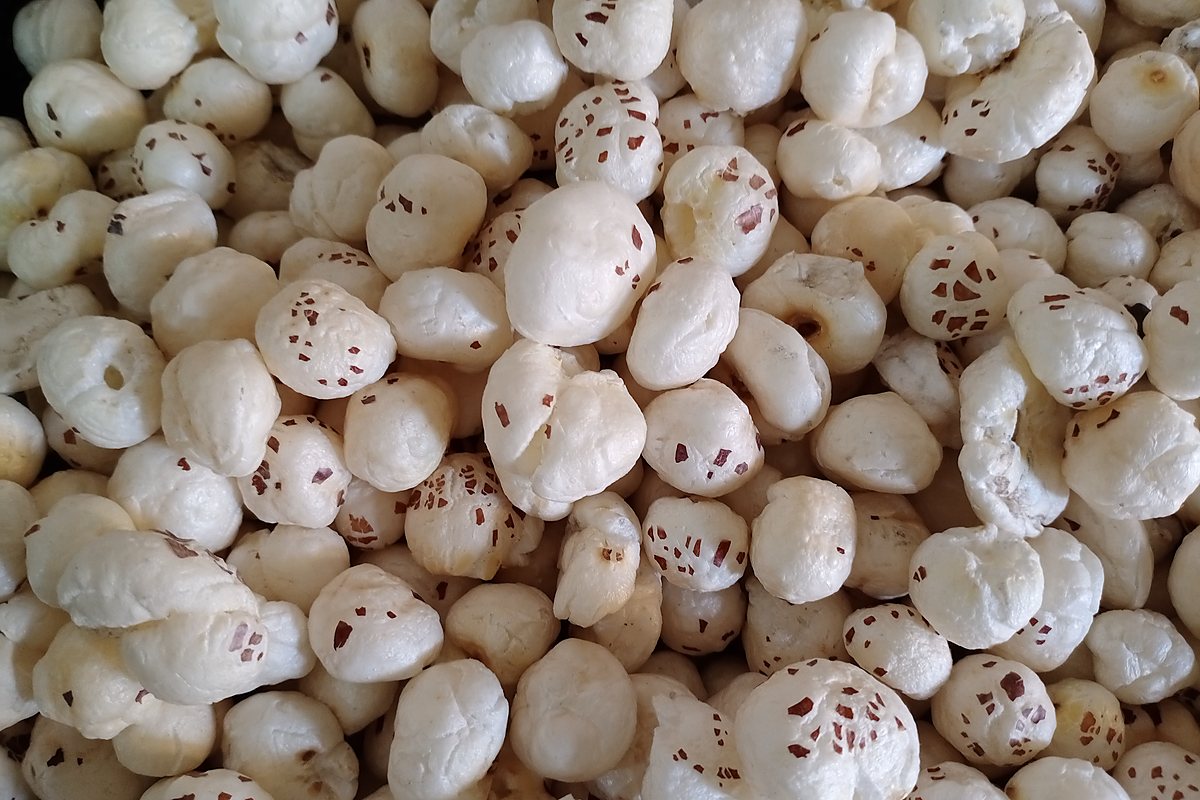
Makhana Buyer Summary
Farmer → Processor → Trader → Exporter → Importer uses DPR and business-plan material as model economics, not a promised return. The sources show how machinery, working capital, raw material, processing losses, labour and distribution can shape a makhana unit or trading model. A real project still needs current quotations, local costs, buyer commitments, funding terms and professional financial review.
What Importers Should Know
The NIFTEM/PMFME DPR and the processing write-up both treat processing as a sequence rather than one machine step. Drying, pre-heating, tempering, roasting and popping are especially important because they influence recovery, colour, crispness and breakage.
The trade pages use the sample quotation as a workflow example only. It shows how FOB/CIF language, payment, samples, inspection and dispatch timing can appear in a commercial document, but it is not treated as FoxnutCentre policy or live market pricing.
Importer Buying Relevance
- state destination country, Incoterm preference, port and expected shipment size.
- ask which documents, tests and labels can be supplied before issuing a purchase order.
- treat current import rules as a separate official verification step.
Detailed Buyer Guidance
Business-plan and DPR material is useful for understanding how the industry works: machinery, working capital, raw material, popping yield, labour, packing and distribution all affect economics. However, model DPR numbers are assumptions, not a promised return and not proof of live supplier capacity.
Buyers and investors should use these pages to ask better questions. What is the current raw material price? What is the recovery from raw seed to popped makhana? How much product is saleable by grade? What is the working-capital cycle? Which buyers are committed and which specifications are already approved?
Specification Notes
- Product form: raw seed, popped makhana, roasted snack, flavoured pack, flour, powder or ingredient.
- Grade and size: Suta reference plus millimetre range where relevant.
- Quality tolerance: moisture, colour, broken percentage, foreign matter and lot consistency.
- Packing: bulk carton, inner liner, retail pack, private-label pack or buyer-specific format.
- Trade details: quantity, destination, Incoterm, inspection need and target shipment window.
Practical Reference Table
| Point | What to check | Buyer relevance |
|---|---|---|
| Cleaning and washing | Removes mud and foreign material from harvested seed | Cleaner starting material and lower contamination risk |
| Drying and storage | Reduces moisture for handling | Poor control can damage later popping quality |
| Pre-heating and tempering | Conditions seed before final roasting | Affects pop recovery and kernel release |
| Roasting and popping | Critical conversion stage | Drives size, whiteness, breakage and final value |
| Polishing and grading | Improves appearance and separates sizes | Supports consistent export specifications |
Procurement Questions
- What exact product form and grade is being quoted?
- Does the sample represent the shipment lot or only a reference sample?
- Which quality parameters will be written into the offer?
- What packing configuration protects the product during transit and storage?
- Which documents, tests and inspections are included, optional or buyer-paid?
- Which figures are model assumptions and which are current quotations?
Common Mistakes To Avoid
- Comparing offers without matching grade, size range, packing and inspection assumptions.
- Treating historical market data as a live quote.
- Accepting broad words such as premium or export quality without measurable tolerances.
- Leaving moisture, broken percentage and foreign matter out of the specification.
Buyer FAQ
Are destination import rules current here?
No. This article flags current-law checks with VERIFY_CURRENT_RULE and avoids unsupported live regulatory claims.
Is farmer → processor → trader → exporter → importer a current-price page?
No. Any price or market reference is historical or source-period specific unless a buyer requests a fresh quotation.
Can this page prove a supplier is certified?
No. Certification, factory ownership, organic status and shipment capacity must be verified for each supplier and lot.
Which source should be trusted if numbers differ?
Prefer official or institutional sources first, preserve the reporting period and explain conflicts instead of hiding them.
What should a buyer do next?
Send a specification-led RFQ with product form, grade, quantity, destination, packaging and testing requirements.